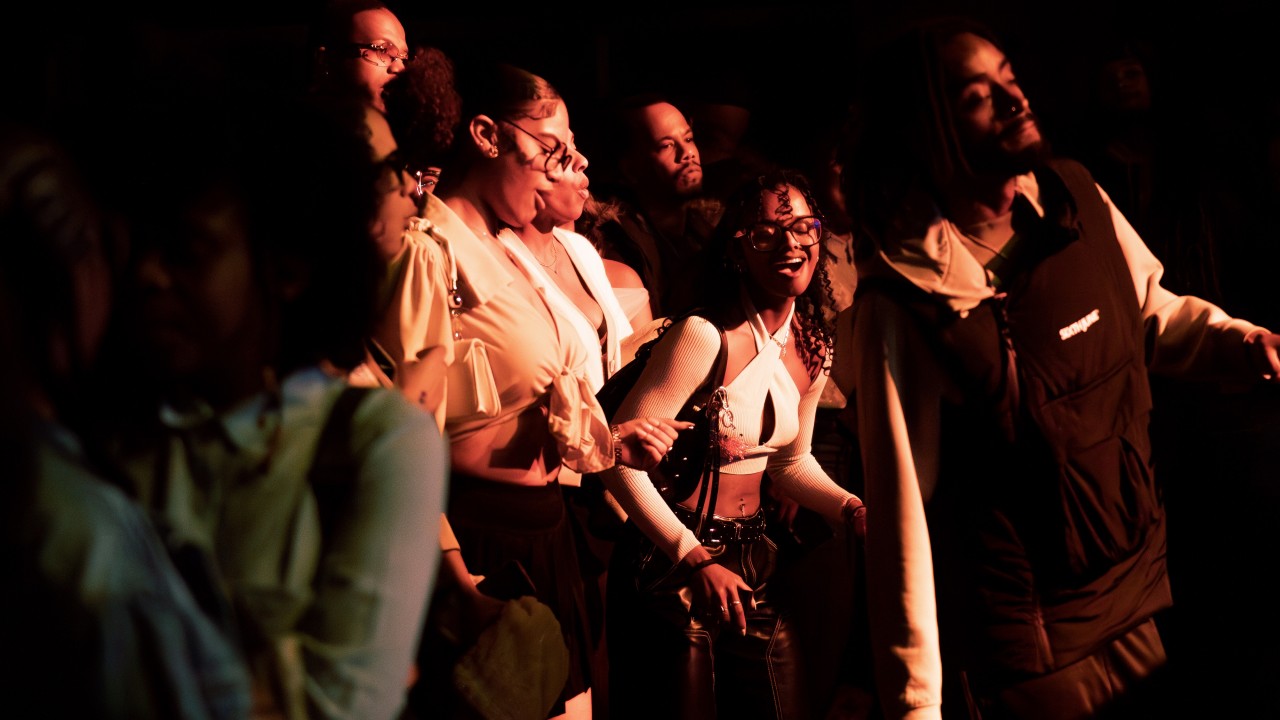
Shorty founded Loxymore to document Caribbean music and give a voice to artists whose stories remain largely untold. From the blog launched in 2015 to video interviews and concerts, this independent media outlet has gradually evolved into a tool for preserving and passing on cultural heritage. Now incubated within MansA Lab, Loxymore is working to consolidate its model and build new bridges between Caribbean and African cultures.
By Selma Chougar
Published on March 5, 2026
In Guadeloupe, Emmanuel Foucan grew up surrounded by music. His parents’ zouk, reggae, jazz, and then the impact of French rap in the 1990s. “It was such an energy. You could feel that it was possible to be a part of it,” recalls the man everyone calls Shorty. That feeling—that culture isn’t just something you consume, but something you can also pass on—would stay with him forever.
In 2015, he launched Loxymore on his own as a blog. At the time, he simply wanted to write about Caribbean artists with the same seriousness as that given to French rap. Very quickly, the project evolved. In 2019, he moved into video. In-depth interviews, music features, and live performances: Loxymore became a platform where artists could share their stories—often for the first time.
Because Shorty makes a simple observation. Caribbean cultures—from dancehall to bouyon, from Creole rap to compas—are spreading but remain poorly documented. “Some pioneers have never been interviewed. Their stories are in danger of being lost,” he says. Loxymore thus becomes a tool for preserving memory.
A team begins to form around Shorty: Chloé, Julien, and Ludovic. Based in Guadeloupe, they produce and edit content, and regularly travel to Paris to meet with artists based in France. In 2023, Loxymore On Stage is launched—a concert series conceived as a natural extension of the media platform. The goal is not only to shine a spotlight on artists but also to create a buzz.
Little by little, their work is gaining recognition. They’ve served on the jury for Les Flammes, collaborated with festivals like Yardland, and been invited to speak at conferences on Caribbean music. It’s a way of making an impact from the inside, without compromising the project’s independence. Loxymore remains self-funded—no grants, little institutional support. “Our ambitions are grand, but our goals remain simple: to be sustainable.”
Producing documentaries, books, and exhibitions: there’s no shortage of ideas. The resources, however, must be built up patiently. Behind every interview lies a conviction: this music tells stories of movement, heritage, and resistance. Documenting it means preventing it from fading into oblivion. It also means affirming that it is not peripheral, but central.
With this in mind, Loxymore joined the MansA Lab incubator. Shorty sees this as the kind of support the project needed: learning how to engage with institutions and understand the mechanisms that enable cultural media to scale up.
Beyond organizational structure, the issue is also geographical. Shorty wants to build more bridges with Francophone Africa. For him, the ties between Caribbean and African cultures are obvious, historic, and deep-rooted. The challenge now is to create spaces for exchange that do not rely solely on Paris, but rather on direct, carefully chosen connections.
