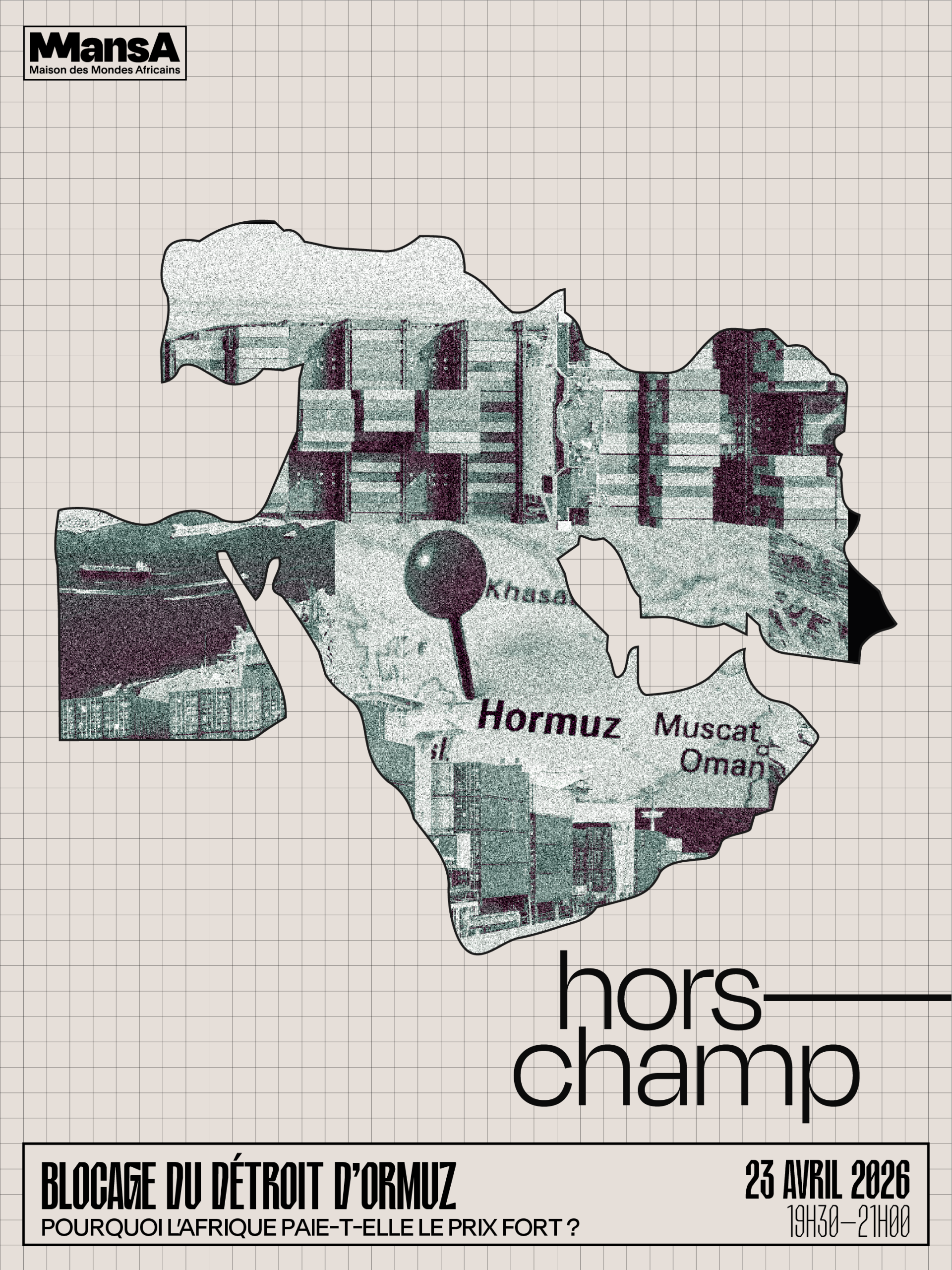
Iran’s blockade of the Strait of Hormuz between March and April 2026 sent shockwaves all the way to African economies. Rising prices, supply shortages, and a slowdown in economic activity: the crisis highlighted the strong interdependencies with global markets. In this new episode of Hors-champ, Mansa examines these dynamics and explores the responses emerging across the continent.
On March 11, 2026, Iran’s blockade of the Strait of Hormuz—through which a large portion of the world’s oil passes—triggered a global crisis whose effects were immediately felt in Africa.
In Kenya, fuel prices are skyrocketing, with increases of up to 80%. In Senegal, the price of a liter of gasoline has reached 2,000 CFA francs, and the price of rice has jumped by 40%.
Behind these price hikes lies a structural dependency: imported energy, vulnerable supply chains, and limited export markets. Lacking access to affordable inputs, many farmers are scaling back their crops. This decline in production is driving prices higher. As a result, inflation sets in, currencies weaken, and the risk of social unrest grows. At the same time, financial resources from the Gulf are dwindling, remittances are shrinking, and projects are being halted due to a lack of funding. Finally, several NGOs are warning of a potential shortage of medicines, which could jeopardize emergency operations on the continent.
What does this crisis reveal about Africa’s place in the global economy? And, more importantly, what African solutions are already emerging to break through these impasses?
PRACTICAL INFORMATION
Doors open at 7:00 p.m.
No one will be admitted after 7:30 p.m.
SPEAKERS
Myriam Benraad – Political scientist, Ph.D. from the Paris Institute of Political Studies (Sciences Po). She is a professor of international relations at Schiller International University and the Free Institute for the Study of International Relations and Political Science. She is the author of, among other works, *Geopolitics of Anger*. From Happy Globalization to Great Wrath (2020) and Terrorism: The Torments of Vengeance. The Early Sources of Violence (2021).
Camille Laporte – Deputy Director of Research at the French Development Agency. With a Ph.D. in political science, she has primarily worked in West Africa on the implementation and evaluation of projects aimed at preventing and responding to social and economic crises.
Jérémy Denieulle – PhD in Geopolitics and Director of Research at the think tank Agriculture Stratégies. He is the author of a dissertation on the geopolitics of wheat and its role in power strategies, particularly in Africa. He has also published *Geopolitics of Cuba: Openness, Perceptions, and Food Security on the Island* (L’Harmattan, 2021).
Matthieu Brun – PhD in Political Science and Research Associate at the “Les Afriques dans le monde” research center at Sciences Po Bordeaux and at the Institute for Research and Studies on the Mediterranean and the Middle East. He is currently Scientific Director of the Foundation for Agriculture and Rural Development Worldwide.
