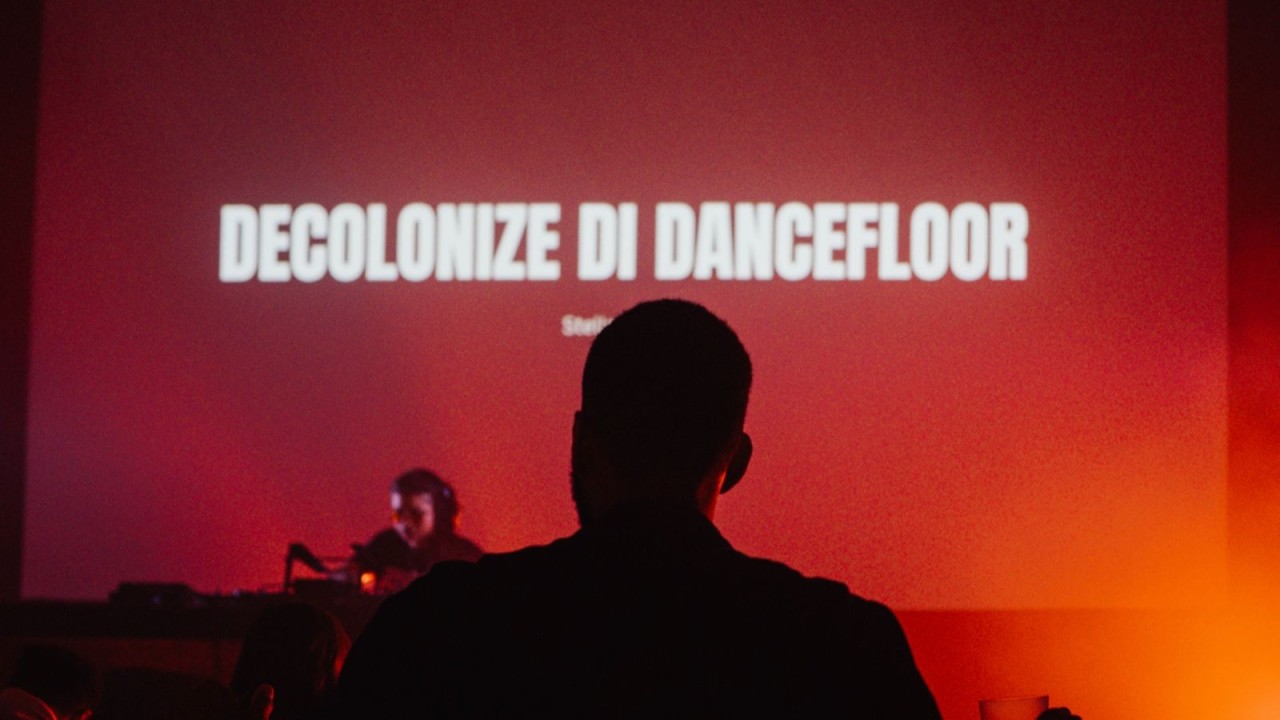
Daniela Da Fonseca Gomes Nazaré is part of MansA Lab’s first cohort with Okinka, a media outlet dedicated to African and Afro-descendant music. Through its editorial content and events, the project explores music as a space for memory, representation, and sharing, while giving greater visibility to the scenes and artists involved.
By Selma Chougar
Published on March 26, 2026
At 28, Daniela Da Fonseca Gomes Nazaré is blazing a unique trail in the French music scene. A curator and journalist, she founded Okinka, a media outlet dedicated to African and Afro-descendant music, conceived in Bordeaux, far from the usual circuits.
Born in Lisbon and arriving in France as a teenager, she grew up across different regions and cultures. But one thread never broke: music. “There was always music at home,” she says, recalling ceremonies, weddings, and records played with her family. Inherited from her parents, who were originally from Guinea-Bissau, this musical culture quickly became an anchor, and then a tool for understanding. Understanding the lyrics, the instruments, the stories—all these were ways of finding her place in the world.
Among his early influences are the band Super Mama Djombo, whose songs blend music with political activism, and Eneida Marta, a leading figure in the Guinea-Bissau music scene. These influences were complemented, in France, by other discoveries from the diaspora—ranging from Ivorian zouglou to compilations of Cameroonian bikutsi—gradually broadening his musical horizons.
Launched in 2023, Okinka grew out of this journey. Starting as a simple Instagram page, the project quickly became a full-fledged media outlet: featuring an editorial website, video interviews, and events. “The idea was to connect music, identity, and community,” she explains. In Bordeaux, where artists of African descent remain largely invisible, Okinka fills a void. Listening sessions, DJ sets, and gatherings: the events attract an audience seeking representation and a sense of community.
Now supported by a team, the project is gradually taking shape, with the goal of remaining independent—both editorially and financially. Ultimately, Daniela Nazaré envisions a festival, international collaborations, and even an audio platform—ways to continue sharing these stories beyond traditional formats.
As part of this effort, she joined the MansA Lab program, an incubator dedicated to cultural entrepreneurs. It’s a logical next step in her journey: “It allows me to build more Afro-centered connections,” she explains, while also helping her project become part of a broader network that balances local roots with an international outlook.
For Daniela Nazaré, the issue goes beyond music. It’s about bringing identities—which are often reduced to categories—into the spotlight. “We’re not just talking about aesthetics, but about people,” she insists. It’s also a way of reminding us that these musical genres are not marginal, but fully contemporary.
